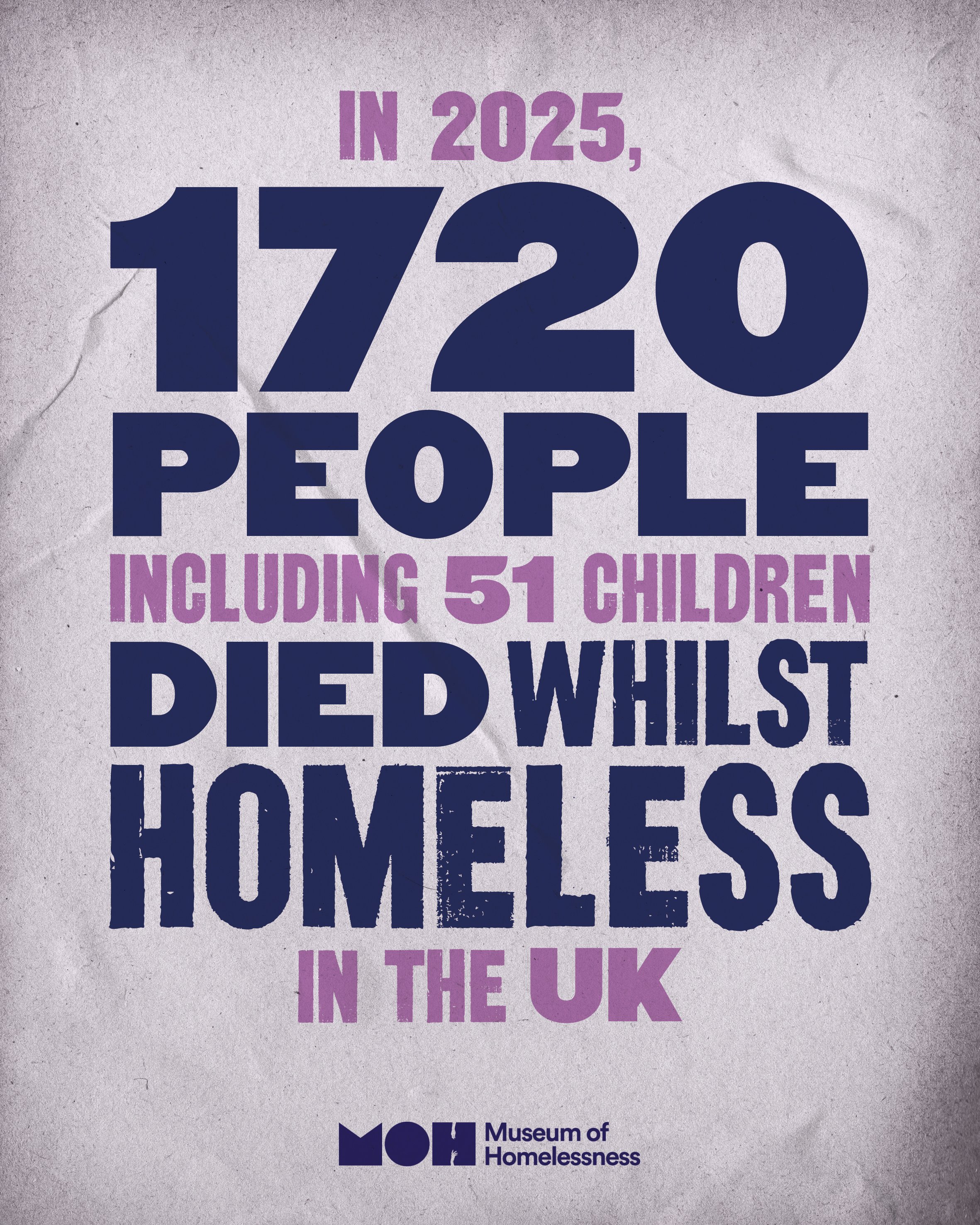
Preliminary findings show that 1720 people - including 51 children - died while homeless in 2025
Preliminary findings show that 1720 people - including 51 children - died while homeless in 2025
Overview of the findings
Independent research by Museum of Homelessness found that deaths rose 6.8% in 2025 vs the previous year. Over 10,000 people have died since 2017.
Local authorities are under-reporting the true scale of homeless deaths - our study found 197 missing from their data, representing 1 in 10 deaths missing from records.
Over 30% of the deaths in 2025 were either on the streets or in rough sleeper’s accommodation
Bristol, Brighton and Hove, Edinburgh, Camden and Stirling had the five highest rates of reported deaths per 100,000 population across the UK.
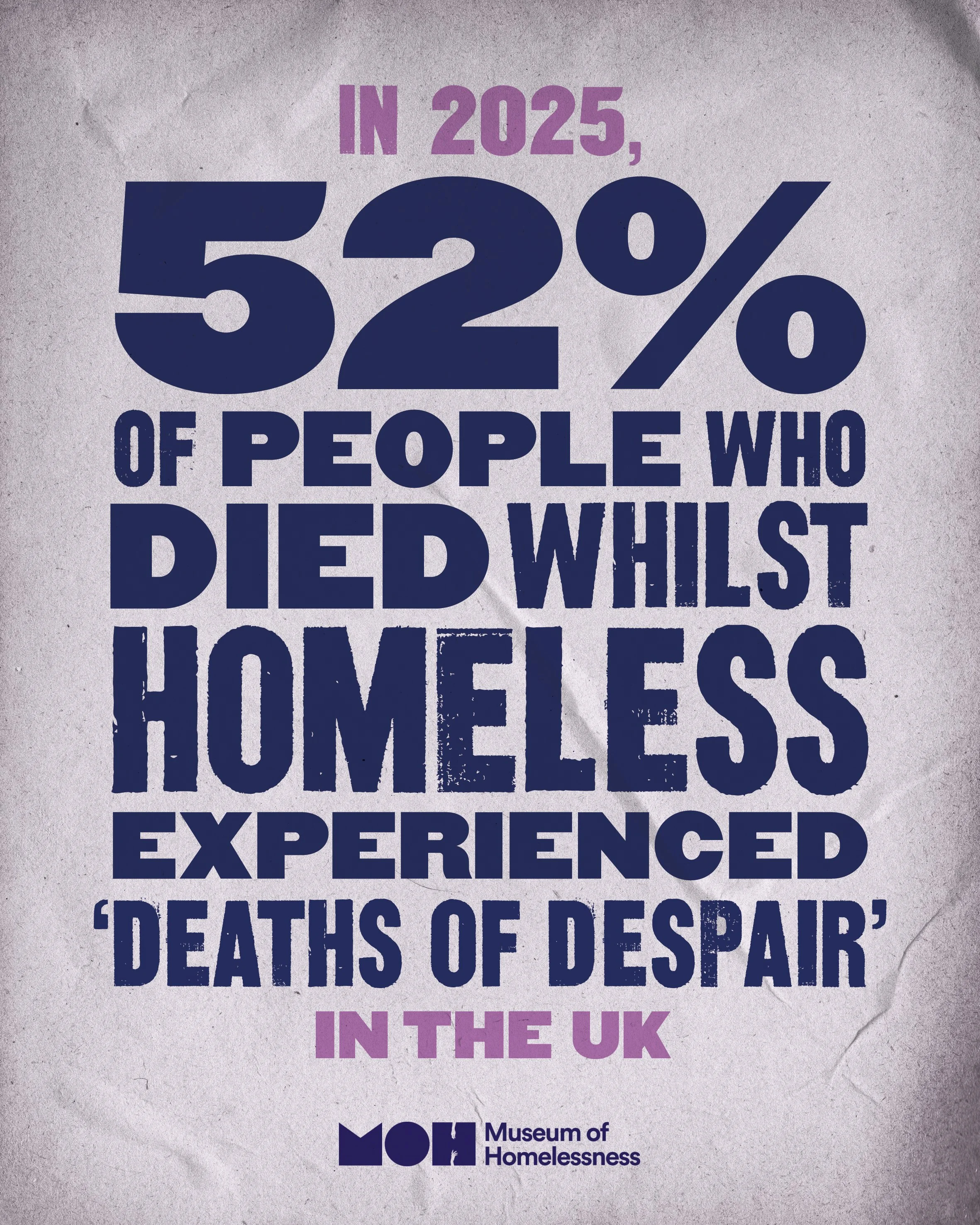
‘Deaths of Despair’ caused by drugs, alcohol or suicide are the most common (52%). Recovery, harm reduction and mental health services need urgent investment.
15% of authorities either failed to respond or stated that they did not hold the data requested.
Comparison with the ONS
The ONS have published comparative information on the deaths of people experiencing homelessness today. The findings are broadly similar:
The ONS recorded 974 people passing away in England and Wales 2025, 4 less than 2024. We recorded 1297 dying in England and Wales, a small increase of 5% between the two years.
There are broad similarities in the trends we have seen over time. Between 2023 and 2025, the ONS recorded a 19% increase in people dying in England and Wales; we have reported a 20% increase over the same period.
Both the ONS and MoH have identified London, North West and South East as having the highest rates of death.
Both datasets have recorded that about 50% of deaths are ‘Deaths of Despair’ caused by drugs, alcohol or suicide. This is the most common cause of death in both datasets.
We capture more people then the ONS due to our different methodologies, our approach enables us to identify more people in temporary accommodation settings. More details about our different approaches can be found here.
Remembering those we have lost
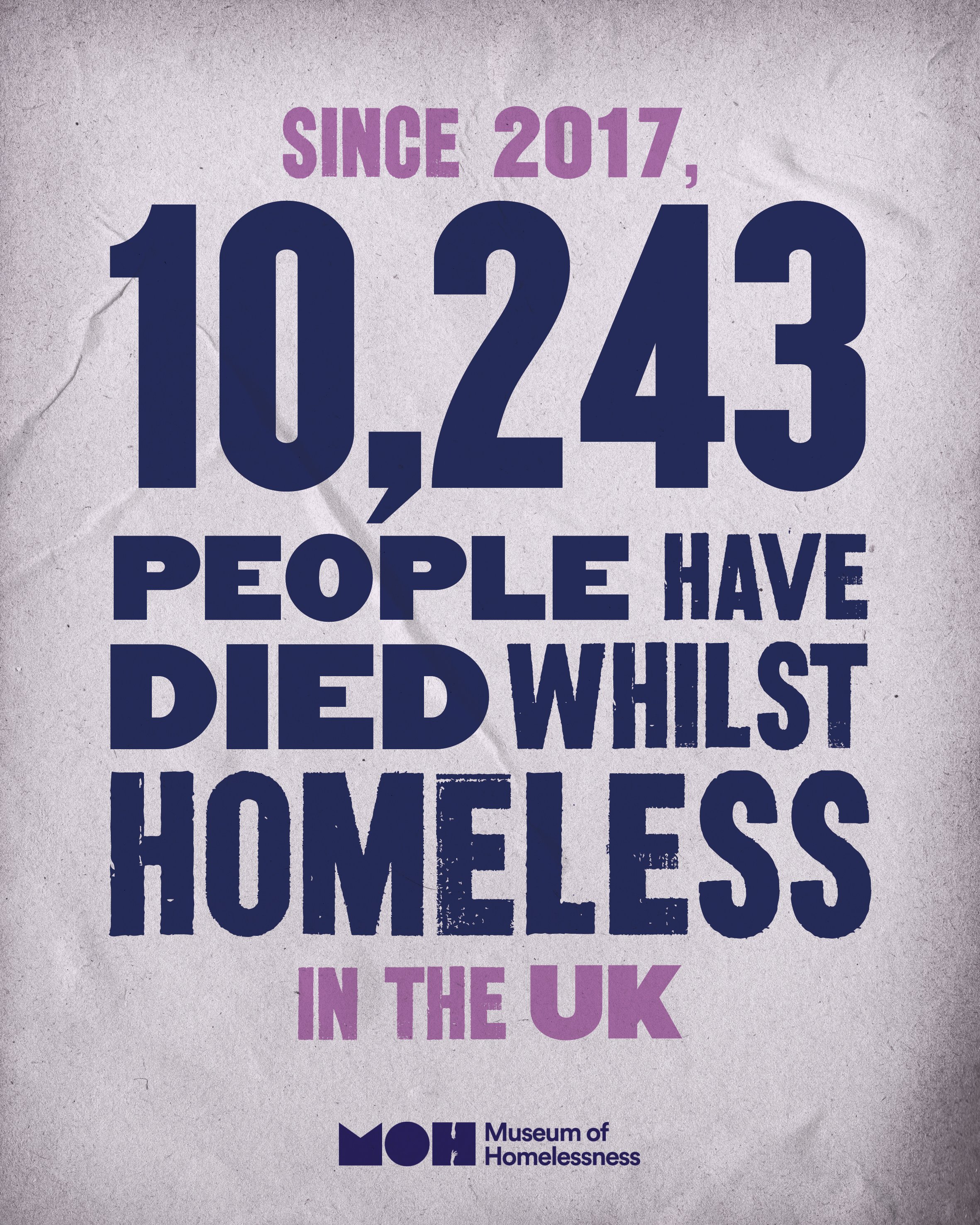
This year’s findings mark a devastating milestone for the Dying Homeless Project. The investigation has now documented 10,243 deaths since we began recording in 2017, providing stark evidence that homelessness is a growing public health and social justice emergency.
Behind every statistic is an individual whose life was cut short while experiencing homelessness, often in circumstances linked to poverty, trauma, poor health, inadequate accommodation, social isolation and failures of support systems. We remember each person with love on our memorial page. We will also be hosting a vigil opposite Downing Street on 15 October where we will read the names known to us in 2025. More details about this can be found here and we hope you will join us.
The 2025 findings are released at a moment when national political attention is increasingly focused on homelessness and rough sleeping. We hope these findings are a spur to more action. Our investigation highlights the human consequences of systemic failure, telling the stories of deaths that could have been prevented if long-term investment in quality housing, healthcare and support had been prioritised.
Two Key Findings
Two overarching conclusions emerge from this year's investigation.

First, deaths continue to rise, particularly among people sleeping rough and people living in rough sleeping accommodation.
More than 30% of all deaths recorded in 2025 occurred either on the streets or in short-term accommodation intended for people who had recently slept rough, despite rough sleeping accounting for less than 3% of the overall homeless population. At least 214 people died whilst rough sleeping or with no fixed abode, representing a further increase on the previous year.
Second, the findings present the strongest evidence yet that the official picture is substantially incomplete.

Our investigative approach identified significant gaps in local authority recording, major inconsistencies in reporting practices and substantial evidence that many deaths are invisible or ignored by local authorities. The Dying Homeless Project identified 197 deaths that were not reported by local authorities, meaning at least one in ten homeless deaths are missing from local authority records.
The picture across the UK
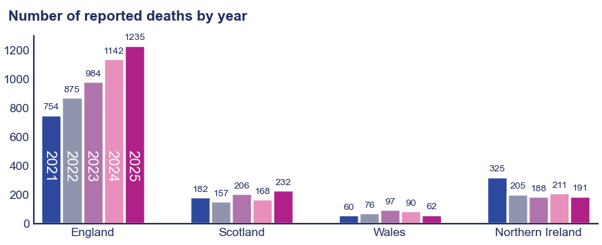
Number of reported deaths by year, 2025
The investigation reveals profound geographical disparities across the UK. These disparities are both in the scale of deaths and also in how local systems prioritise recording, reporting and learning from deaths.
England recorded 1,235 deaths in 2025, an increase of 8% on the previous year. Scotland recorded 232 deaths, representing a striking 38% increase, while Wales and Northern Ireland recorded decreases.
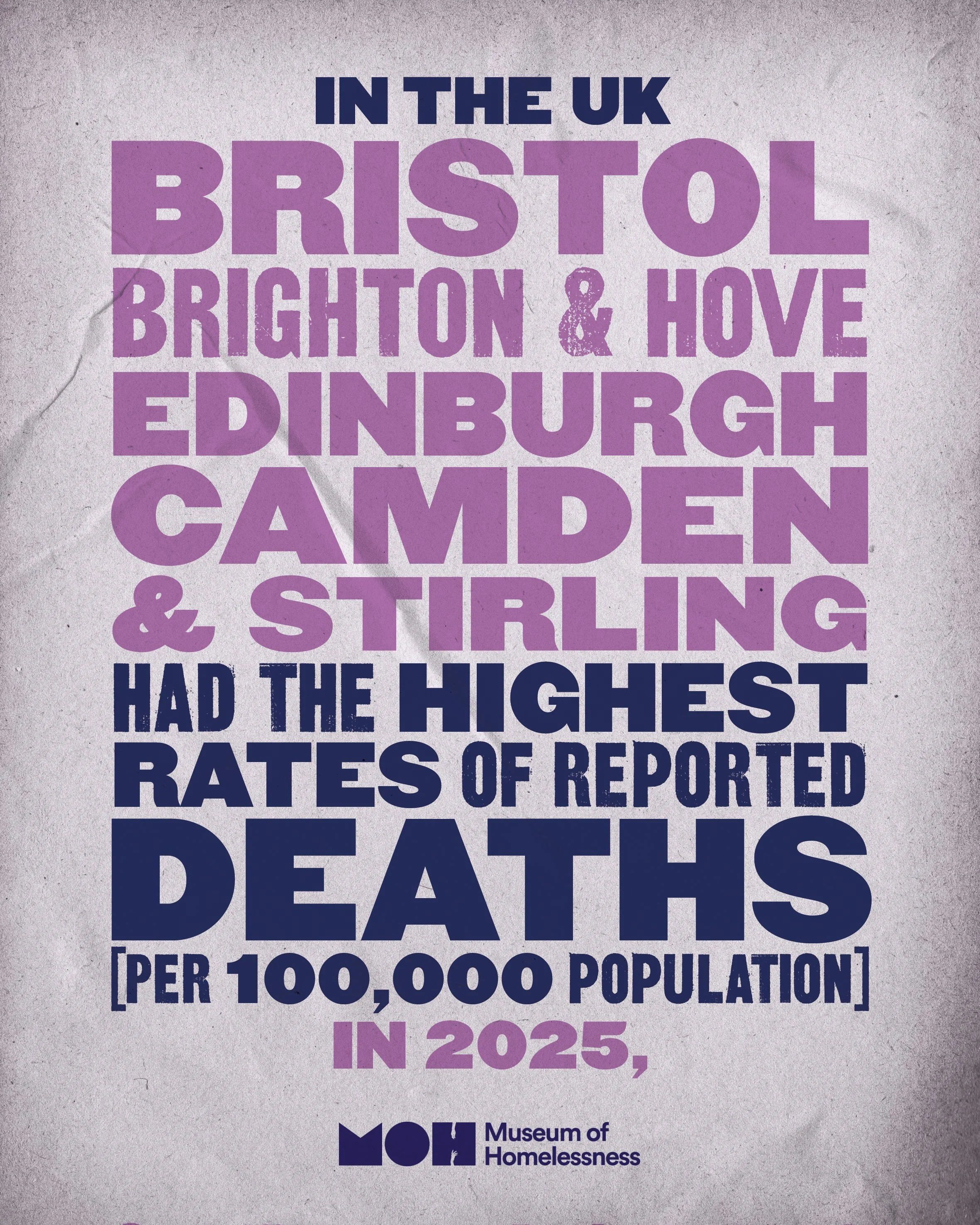
Among local authorities, Bristol, Brighton and Hove, Edinburgh, Camden and Stirling recorded the highest rates of reported deaths per 100,000 population in the UK. Bristol recorded 55 deaths, Liverpool 45, Manchester 35, Kent 33 and Brighton and Hove 32. Edinburgh alone accounted for approximately one quarter of all deaths recorded in Scotland.
One of the most significant new findings concerns children.
Working with the National Child Mortality Database, the project identified 51 children who died whilst living in temporary accommodation during 2025, the highest number ever reported through the Dying Homeless Project. Only seven of those children were known through local authority homelessness reporting routes ,which raises serious concerns about how local authorities departments are working together to safeguard homeless children.
Sixty-three per cent of the children who died were under one year old. Our investigation recommends that local authority housing departments should be required to record all child deaths occurring in temporary accommodation and publish learning on how future deaths can be prevented.
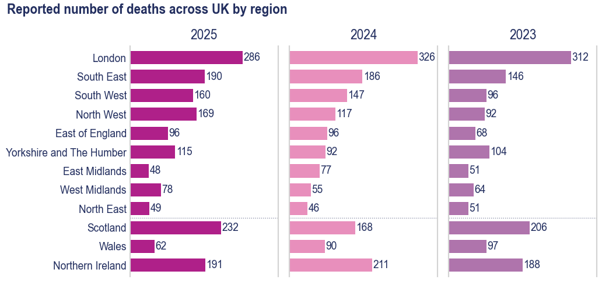
Reported number of deaths by UK region.
We are pleased to see intentions to use Empty Dwelling Management Orders to ease the temporary accommodation crisis and we urge central and local government to act swiftly on this.
Gender
We know the gender of 1,374 of the 1,720 people who died whilst homeless in 2025. We were told about the deaths of 373 women and 1,001 men.
We were not about any transgender people who died whilst experiencing homelessness in 2025.
Age
We know the age range of 1,340 of the people who died (78%) whilst homeless in 2025. In the majority of these cases we know their exact age at death, but we only know the age range for the majority of children.
The investigation reveals profound geographical disparities across the UK. These disparities are both in the scale of deaths and also in how local systems prioritise recording, reporting and learning from deaths.
England recorded 1,235 deaths in 2025, an increase of 8% on the previous year. Scotland recorded 232 deaths, representing a striking 38% increase, while Wales and Northern Ireland recorded decreases.
Among local authorities, Bristol, Brighton and Hove, Edinburgh, Camden and Stirling recorded the highest rates of reported deaths per 100,000 population in the UK. Bristol recorded 55 deaths, Liverpool 45, Manchester 35, Kent 33 and Brighton and Hove 32. Edinburgh alone accounted for approximately one quarter of all deaths recorded in Scotland.
Cause of Death
Information about the cause of death was reported to us in relation to 508 people, which represents about 30% of all those who died. This is similar to last year.
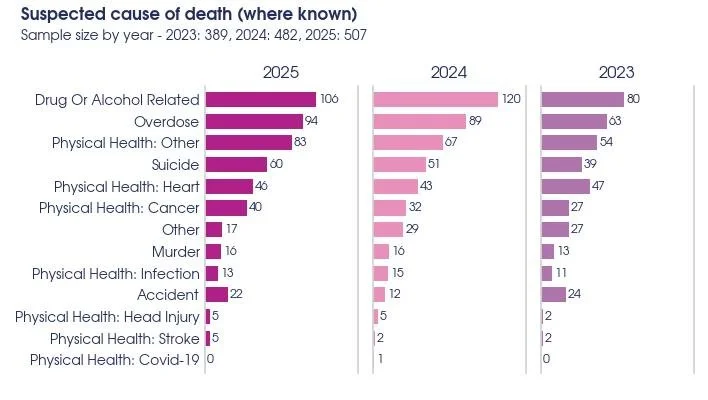
We do not hold any cause of death data for Northern Ireland for 2025 due to the way that information is supplied.
There are various reasons for somewhat low reporting on the cause of death. Sometimes cause of death has not yet been determined by a coroner when we make our request for information, sometimes local authorities record that a death has occurred but not its cause and in other cases local authorities deny this part of our request citing exemptions under the Freedom of information legislation, and data protection concerns.
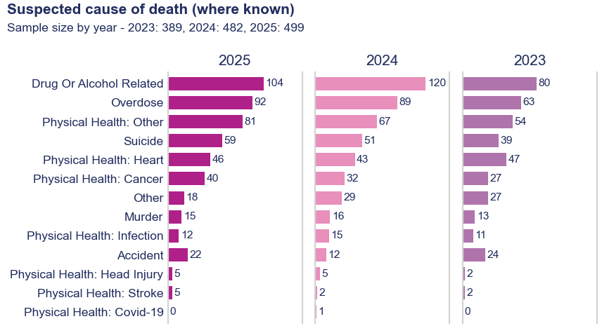
Suspected cause of death
Accommodation Status
We have information about the housing status of 1,485 (86%) of the people who died at the time of their passing.
Since the Dying Homeless Project began nine years ago, we have recorded 997 deaths of people who were rough sleeping. We know the true figure is likely much higher.
We reported a 42% increase in the number of people who died whilst rough sleeping in 2024. In 2025, there was a further 25% increase with at least 214 people having died without a safe place to stay.
In total, 30% of people we documented died whilst sleeping rough or in rough sleeper’s accommodation despite that group accounting for less than 3% of the total homeless population.
A recurring theme in our investigation is that moving people indoors does not automatically make them safe, alongside deepening concerns about deaths affecting people rough sleeping with nowhere safe to sleep at night. Our findings reveal a homelessness system in which increasing numbers of people closest to the streets are living in and out of emergency and unsupported accommodation where they are exposed to people and situations that represent a genuine risk to life. During the year we documented the case of Zaid Yawad who died in a hostel in Bristol and wasn’t found for over a week despite his family raising a Missing Persons report. In Cornwall, Claudio Aquilino and Daniel Coleman died at the hands of serial killer James Desborough, with four more deaths at the same hotel used to accommodate homeless people in Newquay remaining under police investigation.
We also documented 44 people who died whilst in contact with the criminal justice system or shortly after leaving prison, including numerous individuals released into homelessness, hotels, probation accommodation or temporary accommodation. The correlation between prison release and homeless deaths is undeniable and a serious concern.
The project also recorded 49 deaths in exempt accommodation, whilst stressing that the true number is likely to be substantially higher because very few local authorities record such deaths.
Our full report with detailed analysis will be published on 14 October.
The Office for National Statistics are releasing their statistics on the deaths of people experiencing homelessness on 1st October. We welcome this, as it has been a recommendation in our own investigation since they stopped in 2021 and during 2026, we have met with both the ONS and MHCLG to provide information on our methodology and approach.
The ONS announcement in late July has meant that we have needed to adjust our usual timetable for the findings release. Therefore our full report will be released in two weeks, but we are able to present preliminary findings released on 1st October to coincide with the ONS statistics and provide analysis.
museum of homelessness and ons data sets
Deaths among people experiencing homelessness are difficult to measure, and no single source is able to accurately capture every death. The ONS and Museum of Homelessness use different methods and data sources, meaning our figures are not directly comparable. Both sources provide valuable evidence that contributes to our understanding of mortality among people experiencing homelessness and the wider challenges faced by this population.
For full detail on the differences between the datasets we have produced this FAQ guidance available to download here.
Recommendations
All local authorities should be required to record and report homeless deaths occurring in their area, including children. A responsible individual should be identified in each authority with responsibility for ensuring that learning from deaths is published and acted on to prevent avoidable loss of life.
To prevent deaths arising from inadequate, unsafe or unsuitable housing:
The Prime Minister should ensure that the Ministry for Housing, Communities and Local Government are able to commit to long-term investment in supported night shelter and other ‘off the streets’ accommodation, bringing new accommodation into operation that is high-quality, safe, flexible, community-centred and trauma-conscious.
Implement the Supported Housing (Regulatory Oversight) Act 2023 in full, and ensure robust measures are in place to ensure exempt accommodation is fit for purpose and providing tenants with the promised support and that rogue landlords are held robustly to account.
To reduce reliance on unsafe exempt and temporary accommodation, MHCLG should resource local authorities to publish and deliver 5-year Empty Homes Plans, assessing the empty homes in their area and how they will use tools including Empty Dwelling Management Orders to bring them back into use.
To prevent deaths arising from a lack of adequate support:
The Home Office and MHCLG should develop statutory guidance about the role and scope of police, private security and local homelessness organisations when working with people rough sleeping on the streets or living in encampments, to ensure that compassionate support and sustained routes off the street are the priority.
The Prime Minister should build on recent investment by the Ministry for Housing, Communities and Local Government in voluntary and grassroots sector organisations, strengthening small, community-led and lived experienced centred responses to homelessness.
The Department for Health and Social Care should increase funding for harm reduction and suicide prevention; the availability of overdose prevention and safer injecting services should be an urgent priority in policy and practice, as should pathways into detox and recovery and trauma-focused mental healthcare.
The Ministry of Justice should commit to ensuring that transitional accommodation is available for all people leaving prison without a safe place to stay, mandating multi-agency discharge planning is in place and increasing the supply of supported accommodation to meet need.
We remember each person with love.
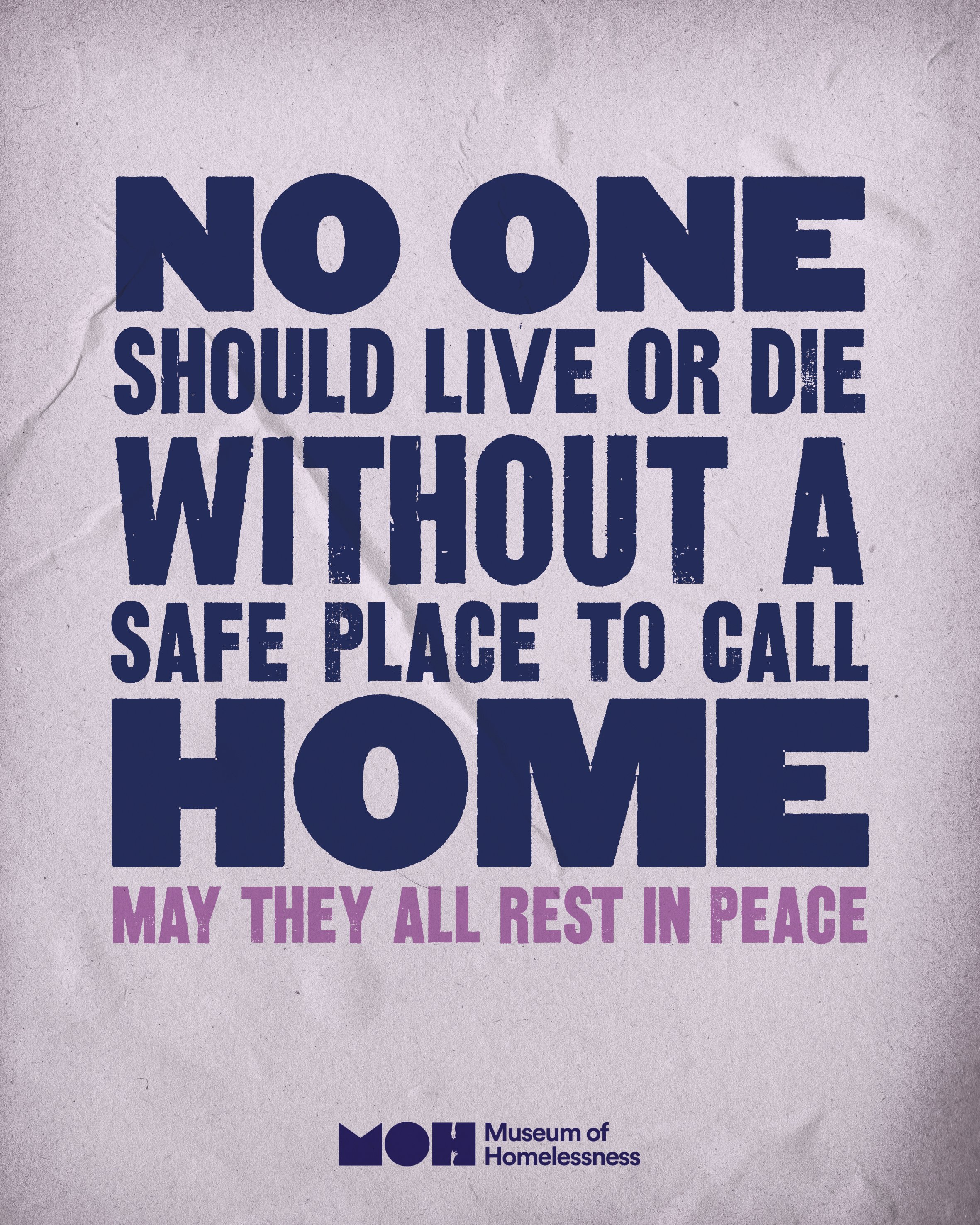
May they all Rest in Peace.