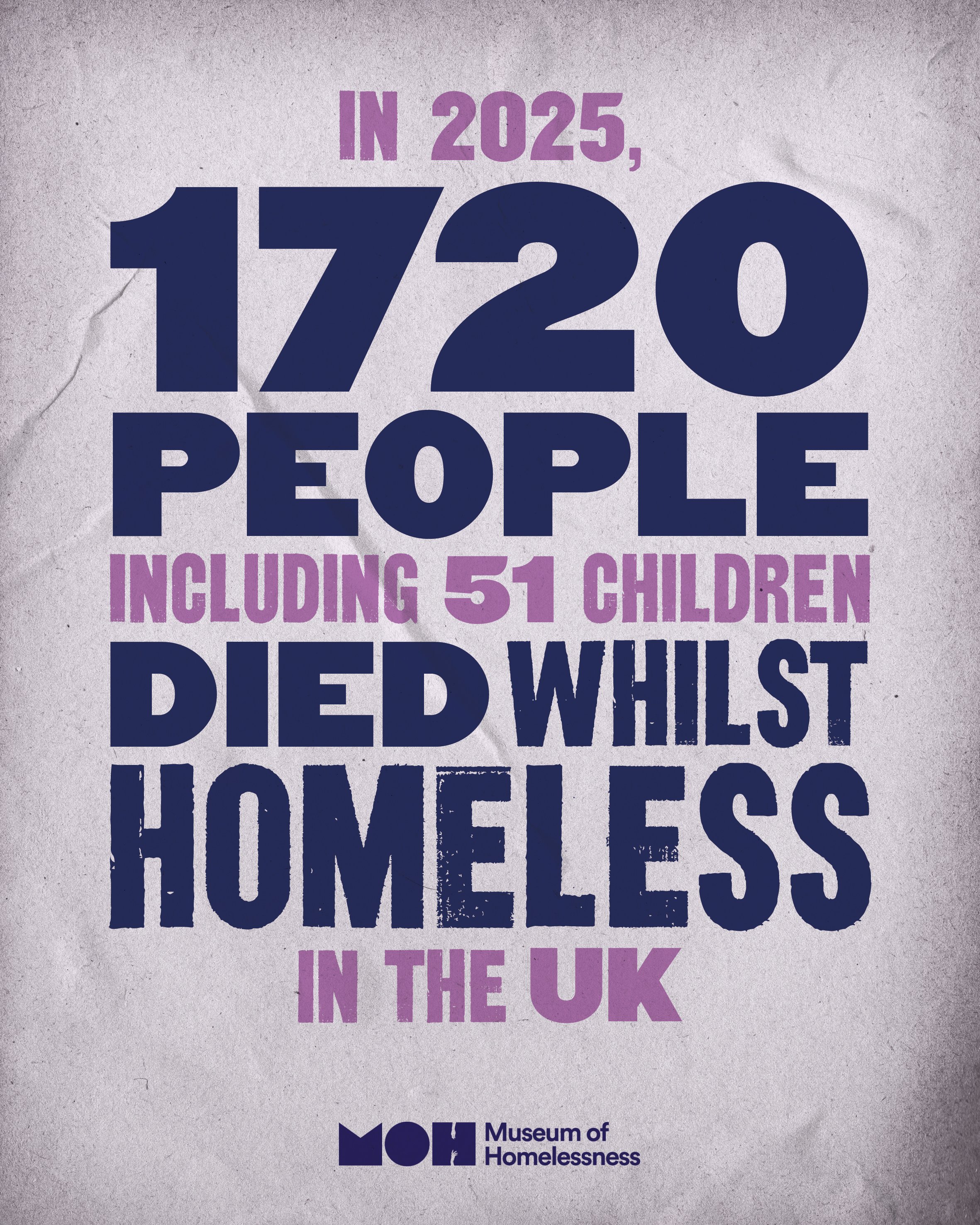
our findings show that 1720 people - including 51 children - died while homeless in 2025
Overview of the findings
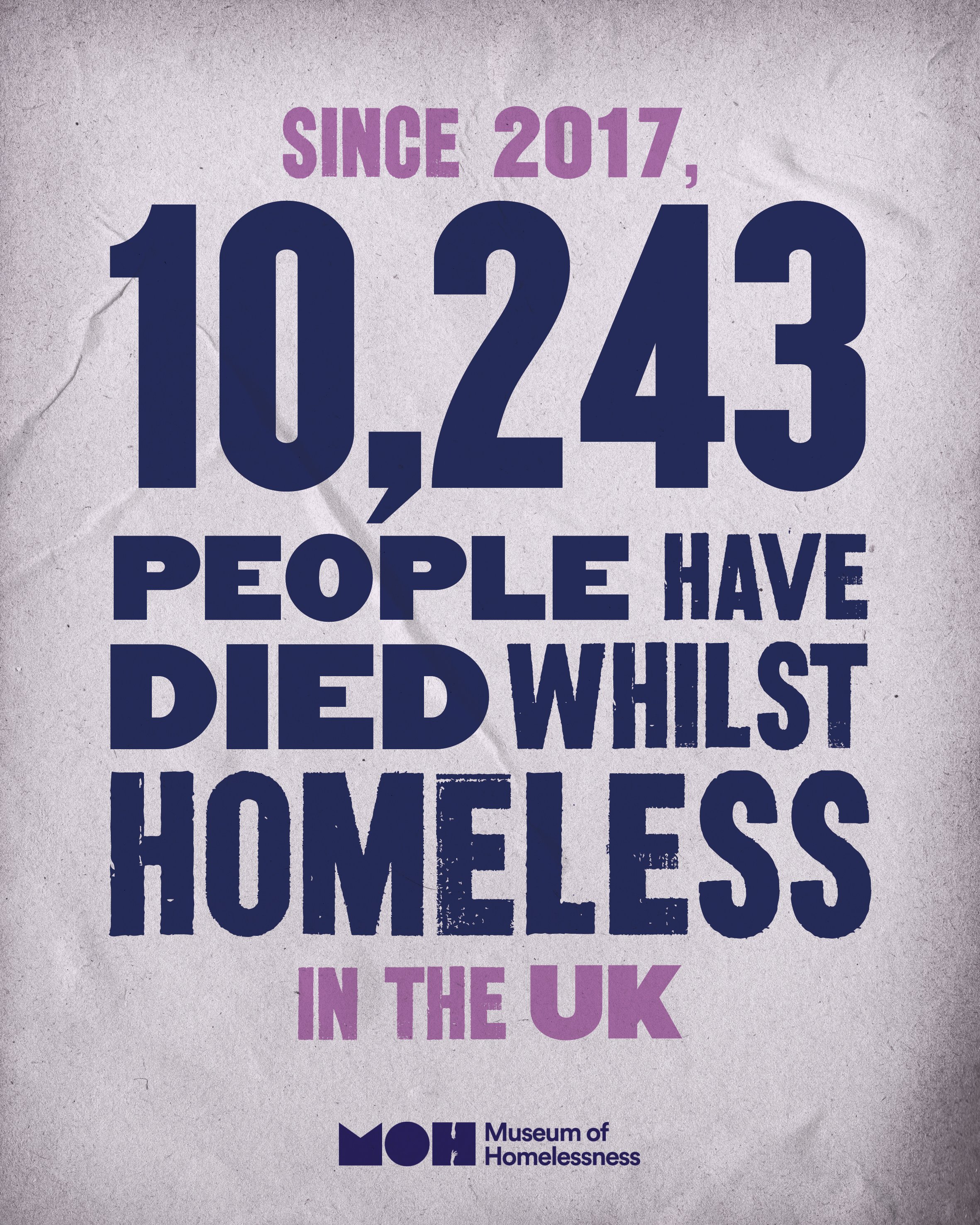
Independent research by Museum of Homelessness found that deaths rose 6.8% in 2025 vs the previous year. Over 10,000 people have died since 2017.
Local authorities are under-reporting the true scale of homeless deaths - our study found 197 missing from their data, representing 1 in 10 deaths missing from records.
Over 30% of the deaths in 2025 were either on the streets or in rough sleeper’s accommodation
Bristol, Brighton and Hove, Edinburgh, Camden and Stirling had the five highest rates of reported deaths per 100,000 population across the UK.
‘Deaths of Despair’ caused by drugs, alcohol or suicide are the most common (52%). Recovery, harm reduction and mental health services need urgent investment.
15% of authorities either failed to respond or stated that they did not hold the data requested.
Today, October 14th we publish our annual report in full, you can read the full analysis here
Remembering those we have lost
This year’s findings mark a devastating milestone for the Dying Homeless Project. The investigation has now documented 10,243 deaths since we began recording in 2017, providing stark evidence that homelessness is a growing public health and social justice emergency.
Behind every statistic is an individual whose life was cut short while experiencing homelessness, often in circumstances linked to poverty, trauma, poor health, inadequate accommodation, social isolation and failures of support systems. We remember each person with love on our memorial page. We will also be hosting a vigil opposite Downing Street on 15 October where we will read the names known to us in 2025. More details about this can be found here and we hope you will join us.
The 2025 findings are released at a moment when national political attention is increasingly focused on homelessness and rough sleeping. We hope these findings are a spur to more action. Our investigation highlights the human consequences of systemic failure, telling the stories of deaths that could have been prevented if long-term investment in quality housing, healthcare and support had been prioritised.
Our full report with detailed analysis IS AVAILABLE HERE
Recommendations
All local authorities should be required to record and report homeless deaths occurring in their area, including children. A responsible individual should be identified in each authority with responsibility for ensuring that learning from deaths is published and acted on to prevent avoidable loss of life.
To prevent deaths arising from inadequate, unsafe or unsuitable housing:
The Prime Minister should ensure that the Ministry for Housing, Communities and Local Government are able to commit to long-term investment in supported night shelter and other ‘off the streets’ accommodation, bringing new accommodation into operation that is high-quality, safe, flexible, community-centred and trauma-conscious.
Implement the Supported Housing (Regulatory Oversight) Act 2023 in full, and ensure robust measures are in place to ensure exempt accommodation is fit for purpose and providing tenants with the promised support and that rogue landlords are held robustly to account.
To reduce reliance on unsafe exempt and temporary accommodation, MHCLG should resource local authorities to publish and deliver 5-year Empty Homes Plans, assessing the empty homes in their area and how they will use tools including Empty Dwelling Management Orders to bring them back into use.
To prevent deaths arising from a lack of adequate support:
The Home Office and MHCLG should develop statutory guidance about the role and scope of police, private security and local homelessness organisations when working with people rough sleeping on the streets or living in encampments, to ensure that compassionate support and sustained routes off the street are the priority.
The Prime Minister should build on recent investment by the Ministry for Housing, Communities and Local Government in voluntary and grassroots sector organisations, strengthening small, community-led and lived experienced centred responses to homelessness.
The Department for Health and Social Care should increase funding for harm reduction and suicide prevention; the availability of overdose prevention and safer injecting services should be an urgent priority in policy and practice, as should pathways into detox and recovery and trauma-focused mental healthcare.
The Ministry of Justice should commit to ensuring that transitional accommodation is available for all people leaving prison without a safe place to stay, mandating multi-agency discharge planning is in place and increasing the supply of supported accommodation to meet need.
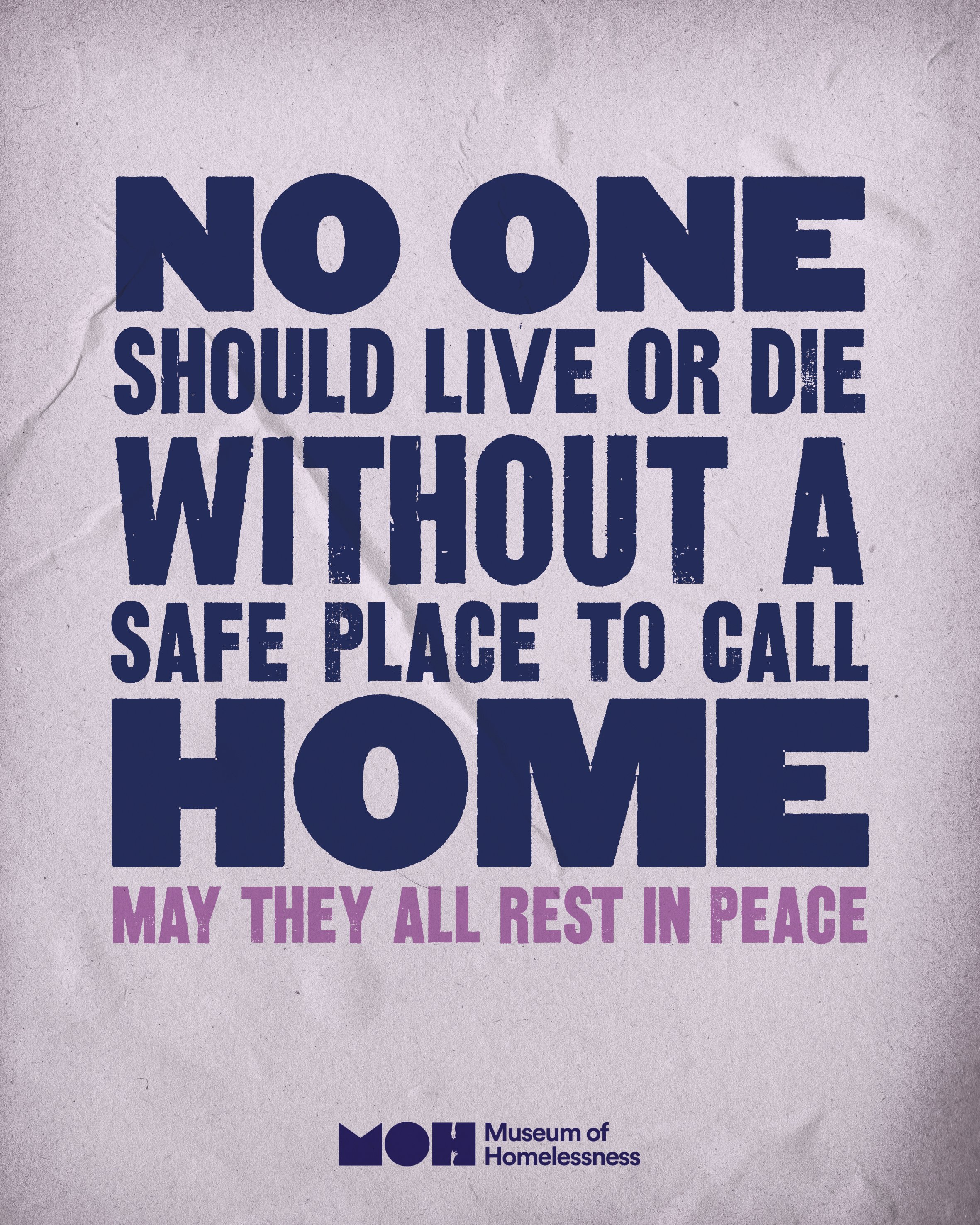
We remember each person with love.
May they all Rest in Peace.